
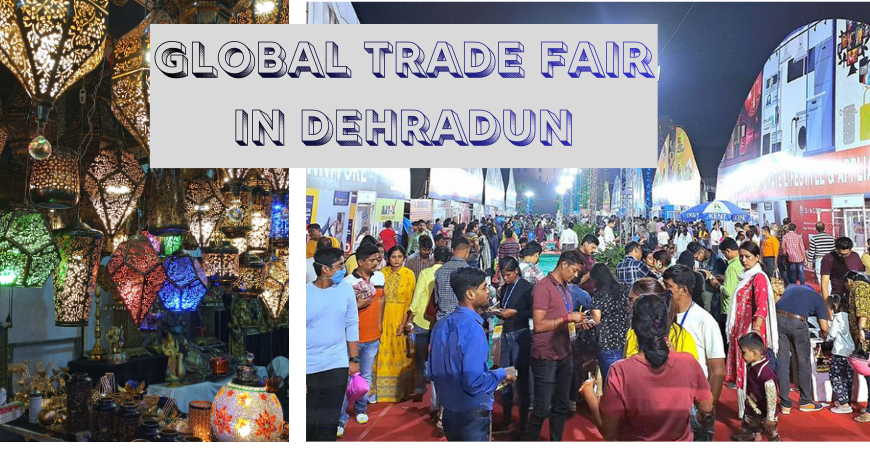
The global trade fair in Dehradun has emerged as a defining platform within India’s rapidly expanding trade and exhibition landscape. In an environment where businesses are overwhelmed by digital advertising, algorithm-driven visibility, and short attention spans, this event offers something increasingly valuable—real human interaction that leads to trust, clarity, and meaningful outcomes. More than a showcase of products, it represents a space where industries converge, ideas evolve, and commercial relationships begin.
As markets become more competitive, companies are no longer satisfied with surface-level exposure. They seek platforms that allow them to understand buyer intent, test offerings, and build long-term credibility. The global trade fair in Dehradun answers this need by providing a structured, professional environment where interaction happens naturally and decisions are informed by real experience rather than assumptions.
This prestigious event is organized by the India Global Grand Trade Fair in association with the Bharat Chamber of Commerce, a collaboration that adds institutional strength and strategic depth. The involvement of such bodies ensures that the exhibition maintains high standards of organization, representation, and credibility, making it a trusted destination for both exhibitors and visitors from across India and abroad.
The Evolution of Trade Fairs in the Modern Business Era
Trade fairs have long been associated with commerce, but their role has evolved significantly. In the past, exhibitions were often treated as optional promotional events. Today, they function as strategic growth platforms where businesses evaluate markets, build networks, and strengthen positioning. This evolution is clearly reflected in the growing importance of the global trade fair in Dehradun.
Digital platforms offer speed and reach, but they often lack depth. Buyers may view ads, browse websites, or follow brands online without ever forming real trust. Physical exhibitions fill this gap by allowing face-to-face engagement. Conversations happen in real time, questions are answered instantly, and confidence builds through direct experience.
This shift explains why Trade Fair And Exhibition platforms continue to thrive even in a digital-first economy. They provide something technology cannot fully replicate—the human connection that drives serious business decisions.
Dehradun’s Emergence as a Strategic Trade Destination
Dehradun’s rise as a trade and exhibition destination reflects broader economic decentralization in India. Once known primarily for education, tourism, and defense institutions, the city has steadily developed the infrastructure needed to host large-scale commercial events.
Improved road and rail connectivity, modern venues, and expanding urban development have transformed the city into a viable hub for exhibitions. The global trade fair in Dehradun benefits from this transformation by attracting a diverse audience that includes entrepreneurs, professionals, institutional buyers, and families.
For many businesses searching online for a Trade Fair near me, Dehradun offers an ideal balance between accessibility and market reach. It allows exhibitors to connect with a wide regional audience while also welcoming participation from international markets.
A Marketplace Designed for Real Business Outcomes
The defining strength of the global trade fair in Dehradun lies in its ability to generate tangible business results. This is not an event focused solely on visibility or footfall; it is a structured marketplace where discussions move toward decisions.
Exhibitors engage in meaningful conversations that include product demonstrations, pricing negotiations, customization discussions, and distribution planning. Buyers, on the other hand, benefit from evaluating products firsthand, comparing alternatives, and building confidence through direct interaction.
International participants find particular value in this environment. By engaging with regional buyers, they gain insights into consumer preferences that differ from metropolitan trends. This understanding helps refine market entry strategies and ensures more sustainable expansion.
Innovation as a Natural Byproduct of Trade Exhibitions
Innovation does not happen in isolation. It emerges when ideas are exposed to feedback, comparison, and challenge. The global trade fair in Dehradun creates precisely such an environment.
Businesses often choose exhibitions to introduce new products or upgraded services because the response is immediate and honest. Visitors ask questions, express concerns, and share expectations openly. This direct feedback allows companies to refine offerings quickly and accurately.
Startups and emerging brands benefit immensely from this exposure. Sharing space with established companies provides visibility and credibility while offering real-world lessons in presentation, communication, and positioning. The learning gained in a few days often surpasses months of internal planning.
Strengthening MSMEs and Regional Enterprises
Micro, small, and medium enterprises form the backbone of India’s economy, yet they often face challenges related to market access and visibility. The global trade fair in Dehradun addresses these challenges by offering a level playing field.
Participation allows MSMEs to engage directly with wholesalers, distributors, and institutional buyers. These interactions shorten sales cycles and open doors to partnerships that might otherwise remain inaccessible.
Regional manufacturers and artisans also benefit by showcasing products alongside international offerings. This exposure highlights India’s diverse production capabilities and supports inclusive economic growth rooted in regional strength.
The Strategic Importance of Trade Exhibitions for Long-Term Business Growth
Building Business Credibility Through Physical Presence
In today’s competitive business environment, growth is no longer driven by visibility alone. Organizations must focus on credibility, trust, and sustained engagement to remain relevant in evolving markets. Trade exhibitions play a crucial role in this process by offering structured environments where businesses can interact directly with stakeholders who matter most. Unlike digital channels that often emphasize short-term impressions, physical exhibitions enable deeper conversations, practical demonstrations, and relationship-building that translates into long-term value.
Being present at a professionally curated exhibition signals seriousness and commitment. Visitors tend to associate exhibitors with reliability and industry relevance, particularly when the event maintains high standards of organization and participation. For emerging brands and regional enterprises, this perception can be transformative, allowing them to stand alongside established players and gain recognition that would otherwise take years to build.
Direct Market Validation and Consumer Insight
One of the most significant advantages of participating in trade exhibitions is the opportunity for direct market validation. Businesses are able to observe real consumer behavior, understand purchasing intent, and identify gaps between perception and reality. This feedback is immediate and unfiltered, allowing brands to refine their offerings based on genuine responses rather than assumptions.
Over time, this process strengthens product-market fit and reduces the risk associated with expansion decisions. Platforms such as the global trade fair in Dehradun provide this validation in a structured setting where diverse industries and audiences converge. The ability to test ideas, messaging, and pricing strategies in real time gives companies a strategic advantage in increasingly competitive markets.
Strengthening Brand Authority and Market Positioning
Trade exhibitions also play a vital role in building long-term brand authority. Participation signals confidence and readiness to engage with the market at a professional level. When businesses consistently appear at reputable exhibitions, they reinforce their position as serious contributors to their industry.
This visibility extends beyond the event itself. Buyers, partners, and stakeholders often remember brands they encountered in person more clearly than those seen only online. The trust established through face-to-face interaction influences future negotiations, partnerships, and purchasing decisions. Over time, this contributes to stronger market positioning and brand recall.
Networking as a Growth Accelerator
Exhibitions function as concentrated networking ecosystems. They bring together manufacturers, distributors, service providers, consultants, and decision-makers within a limited time frame. These interactions often lead to collaborations that might not occur through traditional outreach methods.
Conversations that begin informally can evolve into distribution agreements, joint ventures, or long-term supply relationships. The efficiency of engaging multiple stakeholders in one place significantly accelerates business development efforts. For companies entering new markets or seeking strategic alliances, such environments reduce barriers and open doors to opportunity.
Learning Through Observation and Industry Exposure
From a strategic perspective, exhibitions offer businesses the opportunity to study industry trends in real time. Observing competitor positioning, pricing strategies, and communication styles provides valuable intelligence. Companies can identify emerging patterns, technological shifts, and changing consumer expectations simply by being present and attentive.
This observational learning is particularly useful for decision-makers who want to stay ahead of market changes without relying solely on reports or secondary research. Events like the global trade fair in Dehradun serve as live indicators of where industries are heading and how markets are responding, making them valuable sources of practical insight.
Value for Creators, Consultants, and Market Observers
Trade exhibitions are not valuable only for sellers and buyers. Creators, consultants, marketers, and researchers gain equally important insights by observing interactions on the exhibition floor. The language used by visitors, the questions they ask, and the concerns they raise reveal market psychology in its most authentic form.
For professionals involved in content creation, branding, or strategy, these observations inform future campaigns and narratives. Unlike digital analytics, which often provide abstract data, exhibitions offer context-rich insights grounded in human behavior and decision-making.
Economic and Regional Impact of Trade Exhibitions
The impact of large-scale exhibitions extends beyond individual businesses. Increased demand for hotels, transport, logistics, and local services contributes to regional economic activity. Employment opportunities arise across multiple sectors, supporting skill development and income generation.
Cities that successfully host recurring exhibitions build reputations as business-friendly destinations. Over time, this attracts further investment, events, and infrastructure development. This cycle reinforces the importance of trade exhibitions as tools for both commercial success and regional growth.
The Human Element in Sustainable Business Growth
Despite technological advancements, business remains fundamentally human. Trust, clarity, and confidence are built through direct interaction. Face-to-face engagement allows for nuance, empathy, and understanding that digital communication often lacks.
Many long-term business relationships trace their origins to brief interactions at exhibitions. This human connection is one of the most enduring strengths of the global trade fair in Dehradun, ensuring its relevance across industries and professional roles.
Trade Exhibitions as Long-Term Strategic Investments
Trade exhibitions should not be viewed as isolated events but as long-term strategic investments. Businesses that approach them with clear objectives and openness to learning gain insights that shape decisions well beyond the exhibition floor.
For organizations focused on sustainable expansion, market relevance, and meaningful engagement, participation in well-curated trade exhibitions remains an essential component of long-term success.
The Value of International Participation
Global participation significantly enhances the credibility and impact of the global trade fair in Dehradun. International exhibitors bring advanced technologies, global standards, and fresh perspectives that enrich the exhibition experience.
For Indian businesses, this exposure encourages benchmarking and quality improvement. Understanding how global brands position themselves helps local enterprises adapt to international expectations.
For overseas participants, the event offers a deeper understanding of India’s regional markets. Unlike metropolitan exhibitions, regional platforms reveal demand patterns that reflect broader national behavior. This exchange strengthens India’s presence within the ecosystem of International Trade Fairs.
Knowledge Exchange Beyond Commercial Transactions
While trade remains central, exhibitions also function as knowledge ecosystems. Informal conversations often lead to insights that influence long-term strategies.
Discussions around consumer behavior, pricing models, logistics challenges, and regulatory considerations help participants refine their approach. For consultants, marketers, and creators, observing these interactions provides practical learning that cannot be replicated through online research alone.
The global trade fair in Dehradun thus becomes a live research environment where learning happens organically through observation and engagement.
Economic Impact on the Regional Ecosystem
The influence of the global trade fair in Dehradun extends beyond the exhibition venue. Increased demand for hotels, transport services, food outlets, and local vendors generates a strong economic ripple effect.
Repeated hosting of large exhibitions enhances the city’s reputation as a business destination. This reputation attracts future events, investments, and opportunities, creating a cycle of sustainable growth.
Employment generation around the event also contributes to skill development and income opportunities, further strengthening the regional economy.
Human Connection at the Core of Business
Despite technological advancements, business decisions remain deeply human. Trust, understanding, and relationships continue to drive outcomes.
Trade exhibitions provide a space where these elements come together naturally. Conversations happen without scripts, questions are addressed honestly, and relationships form organically.
Many long-term partnerships trace their origins to a single conversation at a trade fair. This human element remains the most enduring value of the global trade fair in Dehradun.
Aligning With the Vision of Trade Fair 2025
As the industry moves toward trade fair 2025, expectations from exhibitions are evolving. Businesses now look for well-organized, experience-driven events that integrate technology, sustainability, and engagement.
Modern exhibitions are no longer static displays. They are immersive platforms that encourage storytelling, interaction, and learning. Events that adapt to this shift remain relevant and impactful.
Sustainability has also become a core consideration. Responsible resource use, waste management, and efficient planning are now integral to exhibition design, aligning with global business expectations.
Why Physical Trade Fairs Continue to Matter
Despite the rise of digital marketing, physical exhibitions remain irreplaceable. Online platforms offer reach, but exhibitions offer depth.
Seeing products in person, meeting decision-makers, and experiencing brands directly creates confidence that digital interaction alone cannot achieve. This is why businesses continue to invest in exhibitions as part of their long-term strategy.
Well-structured trade fairs bridge the gap between intention and action, turning interest into opportunity.
A Valuable Platform for Creators and Observers
Beyond businesses, exhibitions offer immense value to creators, researchers, and professionals who observe markets. Every interaction provides insight into real consumer behavior.
For writers, marketers, and consultants, the global trade fair in Dehradun functions as a live research lab. Observing how people react, what they ask, and what influences decisions offers material that informs future strategies and content.
This observational value extends the impact of exhibitions beyond immediate transactions.
Long-Term Brand Value and Market Positioning
Consistent participation in reputable exhibitions enhances brand perception. Being present signals seriousness, credibility, and commitment to growth.
For emerging brands, exhibitions accelerate recognition. For established players, they reinforce authority and trust. Over time, this consistent presence builds strong market positioning.
The relationships formed, insights gained, and visibility achieved often deliver value long after the event concludes.
Looking Ahead: Sustained Growth and Opportunity
As India’s economy continues to expand, structured trade platforms will become even more important. Regional exhibitions play a crucial role in connecting local potential with global opportunity.
Events hosted in emerging cities ensure balanced economic development, preventing growth from concentrating only in metropolitan centers.
With strong organizational backing and growing participation, the global trade fair in Dehradun is well-positioned to remain a key contributor to India’s trade ecosystem.
Conclusion
The global trade fair in Dehradun represents the evolving nature of trade, innovation, and opportunity in modern India. By combining international participation, regional accessibility, and professional execution, it creates an ecosystem that supports meaningful growth.
Backed by the India Global Grand Trade Fair and the Bharat Chamber of Commerce, the event continues to strengthen its credibility and relevance. It stands as proof that while technology shapes communication, real progress is driven by human connection.
For businesses seeking expansion, creators seeking insight, and regions seeking development, platforms like this remain essential in shaping the future of trade.