
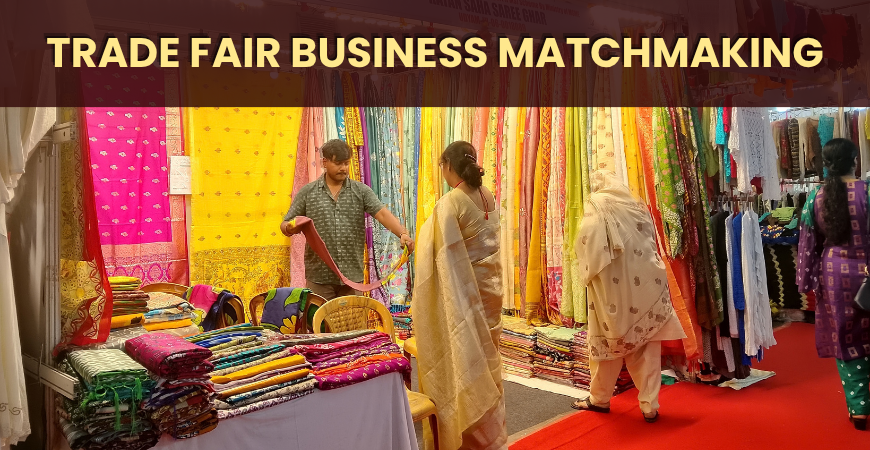
Trade fair business matchmaking helps exhibitors move beyond casual conversations and connect with buyers, distributors, suppliers, and potential business partners who are relevant to their goals. Instead of waiting for the right person to visit a booth, businesses can use planned meetings to have focused conversations around specific requirements and opportunities.
However, a meeting does not automatically become a deal. The real value comes from finding the right contacts, understanding their needs, showing where your offering fits, and agreeing on a clear next step.
What Is Trade Fair Business Matchmaking?
Trade fair business matchmaking is a structured way of connecting exhibitors with relevant buyers, suppliers, distributors, importers, exporters, or potential business partners during an exhibition.
It is different from general business networking. Networking focuses on building broader professional relationships, while matchmaking is usually based on a specific business requirement or potential commercial opportunity.
For example, a manufacturer looking for distributors would benefit more from meeting suitable distributors than from collecting dozens of unrelated contacts.
Why Business Matchmaking Matters at Trade Fairs
A well-planned matchmaking approach can help businesses:
- Find more relevant prospects
- Discover buyers and distributors
- Explore new markets
- Identify suppliers and partners
- Reduce time spent on low-value conversations
- Move discussions toward specific business opportunities
The objective is not to have the largest number of meetings but to have more relevant conversations.
How Trade Fair Business Matchmaking Works
A simple process is:
Identify → Match → Prepare → Meet → Qualify → Follow Up
First, define the type of contact you need. Then identify suitable businesses, research them, prepare for the meeting, and use the conversation to understand their requirements. Finally, qualify the opportunity and agree on a specific follow-up action.
This process can also form part of a wider trade fair strategy for businesses that want measurable outcomes from their exhibition participation.
How to Prepare for Trade Fair Business Matchmaking
Define Your Objective
Decide what you want from the meeting. It could be a new customer, distributor, supplier, market-entry opportunity, partnership, product launch, or demonstration.
Identify the Right Contacts
Research potential companies before the event. Consider their products, markets, customer base, and business requirements. Prioritize relevance instead of trying to fill your schedule with meetings.
Prepare a Short Introduction
Be ready to explain what your business offers, who you serve, and what type of business relationship you are looking for.
Prepare Useful Questions
Ask questions such as:
- What products or services are you currently looking for?
- Which markets do you serve?
- What challenges are you facing?
- Are you looking for new suppliers or partners?
- What is your expected timeline?
These questions can quickly reveal whether there is a genuine opportunity.
How to Turn a Trade Fair Meeting Into a Business Opportunity
Focus on the Other Person’s Needs
Avoid turning the meeting into a long sales pitch. Listen first and present only the products or services that match the prospect’s requirements.
Check the Business Fit
Consider product suitability, target market, commercial expectations, capacity, distribution requirements, and timelines. Not every useful meeting needs to result in an immediate sale.
Agree on a Clear Next Step
A productive meeting should end with a specific action, such as sending a quotation, sharing samples, arranging a demonstration, or scheduling another meeting.
Record Important Details
Note the person’s requirements, products discussed, concerns, timeline, and agreed action. A structured trade show lead process makes it easier to prioritize promising opportunities later.
Follow Up Promptly
Refer to the actual conversation rather than sending a generic message. Mention the product discussed or action agreed upon so the next conversation starts naturally.
What Should You Discuss During a Matchmaking Meeting?
| Area | What to understand |
|---|---|
| Requirement | What does the business need? |
| Product fit | Can your offering solve the requirement? |
| Market | Which customers or regions are involved? |
| Commercial terms | Are expectations broadly compatible? |
| Partnership | Is it a buyer, distributor, supplier, or collaboration opportunity? |
| Timeline | When could they move forward? |
| Next step | What should happen after the meeting? |
You do not need to discuss everything in the first conversation. Focus on determining whether a second discussion is worthwhile.
How to Qualify Business Matchmaking Opportunities
Not every contact deserves the same level of follow-up. Consider:
- Relevance: Does the company genuinely need your offering?
- Decision-making role: Is the person involved in purchasing or partnerships?
- Business fit: Do your markets and capabilities align?
- Commercial potential: Is there a realistic opportunity?
- Timeline: Is the requirement immediate or future?
- Next step: Has the person agreed to continue the discussion?
A distributor actively looking for products in your category is likely to be a higher-priority opportunity than someone who only requested a brochure.
Common Trade Fair Business Matchmaking Mistakes
- Booking irrelevant meetings: More meetings do not always mean better results.
- Talking too much: Ask questions and listen instead of giving a lengthy pitch.
- Using the same pitch: Adapt your discussion to each business’s needs.
- Focusing only on immediate sales: Some partnerships require multiple conversations.
- Skipping the next step: Always establish what happens next.
- Delaying follow-up: A promising conversation can quickly lose momentum.
How India Global Grand Trade Fair Can Support Business Connections
India Global Grand Trade Fair brings businesses and visitors together across different product and business categories. For exhibitors, such an environment can provide opportunities to identify potential buyers, suppliers, distributors, and other business connections.
Businesses can also use trade fair marketing before an event to communicate what they offer and make relevant prospects aware of their participation. The goal should be to create purposeful conversations rather than relying entirely on booth footfall.
How to Measure Business Matchmaking Success
Look beyond the number of meetings. Useful measures include:
- Relevant meetings held
- Qualified contacts
- Follow-up meetings
- Quotations requested
- Samples or demonstrations requested
- Partnership or distribution discussions
- Sales opportunities
- Deals eventually closed
Some relationships take weeks or months to develop, so immediate sales should not be the only measure of success.
Frequently Asked Questions
What is trade fair business matchmaking?
It is a structured process of connecting exhibitors with relevant buyers, suppliers, distributors, or business partners based on specific business requirements.
How is matchmaking different from networking?
Networking is broader and focuses on professional relationship building. Matchmaking is more targeted toward a potential commercial connection.
How can exhibitors find the right business partners?
Research potential companies, define your objectives, identify relevant decision-makers, and prioritize meetings based on business fit.
How can a trade fair meeting lead to a deal?
Identify a genuine business need, demonstrate how your offering fits, and agree on a clear next step such as a quotation, sample, demonstration, or follow-up meeting.
What should exhibitors discuss during a matchmaking meeting?
Focus on requirements, product fit, markets, commercial expectations, partnership possibilities, timelines, and the next action.
Conclusion
Trade fair business matchmaking works best when exhibitors focus on the quality of meetings rather than simply collecting contacts. By identifying suitable businesses, preparing for conversations, understanding requirements, qualifying opportunities, and agreeing on clear next steps, exhibitors can create a stronger path from an initial meeting to a genuine business opportunity.