
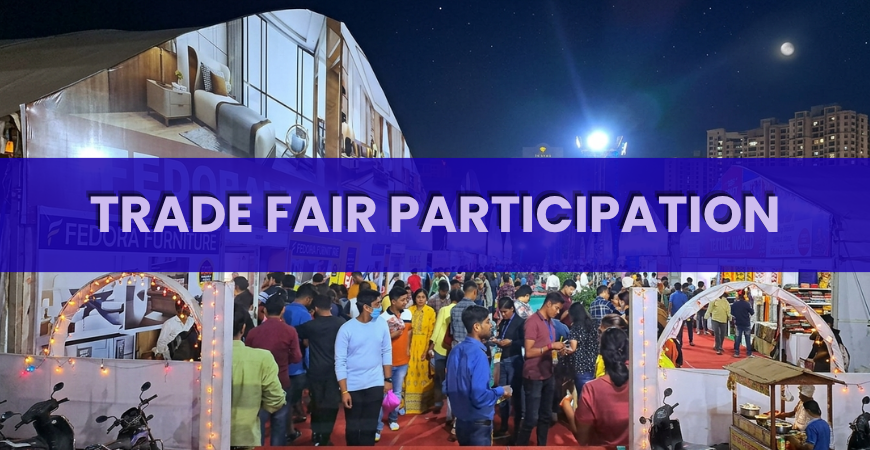
Trade fair participation can give businesses something that digital channels cannot always provide: direct, face-to-face access to potential customers, buyers, suppliers, and industry professionals. But simply booking a booth does not guarantee meaningful results. The real value depends on what a business wants to achieve and how well it uses the event.
A successful trade fair presence can generate more than immediate sales. It can create brand awareness, qualified leads, professional relationships, market insights, partnerships, and opportunities that continue after the event.
What Does Trade Fair Participation Actually Mean?
Trade fair participation means actively representing a business at an exhibition or trade show. This usually involves exhibiting products or services, speaking with visitors, demonstrating offerings, answering questions, and building professional connections.
It is different from simply attending an event as a visitor. An attendee mainly explores the exhibition, while a participating business uses the event as a platform to reach an audience.
For example, a furniture manufacturer may participate to showcase new designs, meet retailers, find distributors, and speak directly with potential buyers. Its goal may not be to sell every product during the event. Building a pipeline of future opportunities can be equally valuable.
What Do Businesses Really Gain From Trade Fair Participation?
The benefits depend on the event, audience, industry, and business objectives. However, several outcomes are common across well-targeted trade fair participation.
1. Greater Brand Visibility
A trade fair puts a business in front of people who have chosen to attend an industry or consumer event. A well-presented booth can introduce the brand to visitors who may not have discovered it through ordinary marketing channels.
This visibility becomes more valuable when the event attracts the right audience. Being seen by relevant buyers can matter more than simply attracting a large number of visitors.
This is one of the key advantages of trade fairs, particularly for businesses looking to build awareness in a specific market.
2. Qualified Leads
Face-to-face conversations can help businesses identify genuine prospects. Visitors can ask questions, discuss their requirements, and show interest in specific products or services.
These interactions can become trade show leads when businesses collect relevant contact information and understand the prospect’s needs.
However, not every visitor should be treated as an equally valuable lead. A person casually browsing and a buyer actively looking for a supplier have very different commercial potential.
3. Direct Customer Feedback
Trade fairs provide businesses with an opportunity to hear directly from their target audience.
Visitors may comment on:
- Product features
- Pricing
- Design
- Packaging
- Customer expectations
- Problems they currently face
This feedback can reveal gaps that may not be obvious from website analytics or internal discussions. Businesses can use these conversations to refine products, messaging, positioning, or future marketing activities.
How Does Participation Help Build Business Relationships?
Trade fairs bring different groups into the same physical environment. Depending on the event, businesses may meet customers, distributors, manufacturers, retailers, suppliers, investors, and complementary businesses.
This creates opportunities for business networking beyond the immediate purpose of the exhibition.
For example, a manufacturer might meet a distributor interested in entering a new market. A software company could discover a complementary service provider for a future partnership. These relationships may not produce immediate revenue, but they can become commercially valuable over time.
The important point is to approach networking with a clear purpose. Instead of collecting as many business cards as possible, businesses should focus on identifying people and companies with genuine potential for collaboration.
What Market Insights Can Businesses Gain?
A trade fair can function as a real-world market research opportunity.
Businesses can observe:
- Which products attract attention
- How competitors present their offerings
- What features visitors ask about
- How similar products are positioned
- What concerns buyers raise
- Which trends appear across different exhibitors
This information can help businesses understand how their own offerings compare with the wider market.
It can also reveal unexpected opportunities. A business may discover demand for a product variation, identify an underserved customer group, or notice that competitors are focusing heavily on an area it has overlooked.
Can Trade Fair Participation Increase Sales?
Yes, but participation itself does not guarantee sales.
A useful way to understand the process is:
Visibility → Conversation → Lead → Follow-Up → Conversion
The event creates opportunities for the first three stages. The business must then convert those opportunities through effective communication and timely trade fair follow-up.
Some visitors may purchase during the event. Others may request a quotation, schedule a meeting, ask for a product demonstration, or require additional information before making a decision.
This means businesses should not judge an event only by the number of sales made on the exhibition floor.
How Should Businesses Measure the Value?
Measuring results helps determine whether trade fair participation was worthwhile and what should change next time.
| Metric | What It Shows |
|---|---|
| Visitor interactions | Level of audience engagement |
| Qualified leads | Potential commercial opportunities |
| Enquiries | Specific buying interest |
| Meetings booked | Strength of business interest |
| Sales | Direct revenue generated |
| Partnerships | Longer-term opportunities |
| Cost per lead | Efficiency of event spending |
| Follow-up conversions | Leads that became customers |
Trade show ROI should therefore be evaluated using several relevant outcomes rather than one number.
For example, an event might produce relatively few immediate sales but generate several high-value business relationships. Another event might attract thousands of visitors but produce very few qualified prospects. The better event depends on the business objective.
When Is Trade Fair Participation Worthwhile?
Trade fair participation is generally more promising when there is a clear match between the business and the event audience.
Before participating, businesses should consider:
Audience Fit
Will the event attract the people who are likely to buy, recommend, distribute, or influence your offering?
Clear Objectives
Decide whether the priority is lead generation, brand awareness, partnerships, customer research, sales, or a combination of these.
Product Relevance
The products or services should provide a clear reason for the target audience to stop, ask questions, or engage.
Staff Preparation
Employees representing the business should understand the products, target audience, key messages, and lead-qualification process.
Follow-Up Capacity
There should be a realistic plan for contacting promising prospects after the event. Collecting hundreds of contacts without following up creates little long-term value.
A Simple Example of Trade Fair Value
Imagine a small manufacturer participating in a relevant industry exhibition.
Instead of focusing only on booth visitors, it sets four objectives:
- Generate qualified enquiries.
- Find potential distributors.
- Gather customer feedback.
- Identify emerging competitors.
During the event, the business speaks with prospective buyers, meets two potential distribution partners, and discovers that several visitors are asking for a product feature it does not currently offer.
Even without immediate large-scale sales, the participation has produced several useful business outcomes.
This is why trade fair participation should be viewed as a business development activity, not simply a short-term sales exercise.
India Global Grand Trade Fair as an Example
The India Global Grand Trade Fair illustrates how a multi-category exhibition can bring businesses and different audiences together in one environment. Such events can provide participating businesses with opportunities for product exposure, customer interaction, networking, and commercial conversations.
The value a particular business receives will still depend on its objectives, audience fit, preparation, and follow-up rather than the event name alone.
Is Trade Fair Participation Worth It for Businesses?
There is no universal answer. Trade fair participation can be worthwhile when the event reaches a relevant audience and the business approaches it with clear objectives.
It becomes less useful when a company participates simply because an event is popular without considering audience fit, costs, staffing, lead handling, or post-event activity.
The best approach is to compare the expected business value with the total investment involved and define measurable outcomes before committing.
Frequently Asked Questions
What is trade fair participation?
Trade fair participation means actively representing a business at a trade show or exhibition to showcase offerings, meet prospects, build relationships, and pursue business opportunities.
What are the main benefits of trade fair participation?
The main benefits can include brand visibility, qualified leads, customer feedback, networking, market research, partnerships, and potential sales.
Does trade fair participation guarantee sales?
No. Sales depend on factors such as audience quality, product relevance, visitor engagement, pricing, lead quality, and post-event follow-up.
How can businesses measure trade fair success?
Businesses can track qualified leads, enquiries, meetings, sales, partnerships, follow-up conversions, and cost-related metrics.
Is trade fair participation useful for small businesses?
It can be, particularly when a small business chooses an event where its target customers or business partners are well represented. Clear objectives and careful budgeting are important.
Conclusion
Trade fair participation can give businesses far more than a temporary physical presence. It can create brand visibility, qualified leads, customer insights, professional relationships, partnerships, and future sales opportunities. The strongest results come when businesses choose relevant events, define clear objectives, engage visitors meaningfully, and follow up on valuable connections after the event.