
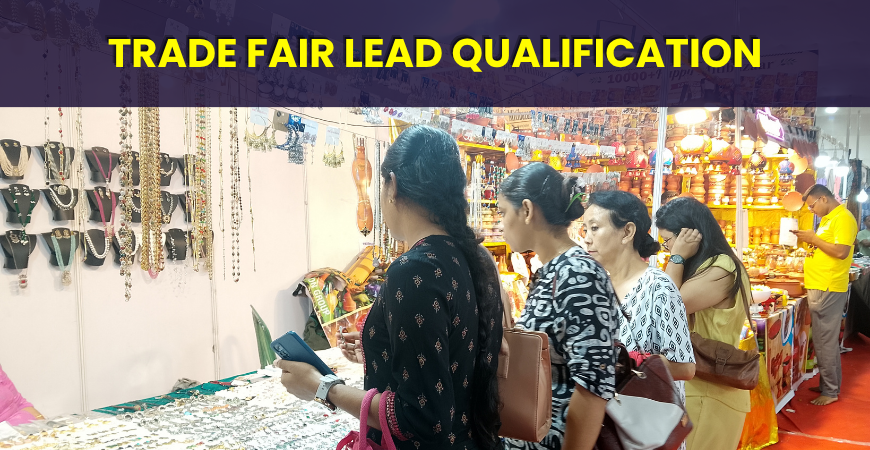
Trade fair lead qualification helps exhibitors identify which visitors are most likely to become customers instead of treating every conversation or collected contact as an equally valuable opportunity. At a busy trade fair, knowing who has a genuine requirement, a clear buying intention, and a suitable reason to consider your offering can make follow-up more focused and productive.
Events such as the India Global Grand Trade Fair bring the broader trade fair experience into focus, where visitors and businesses can interact around products, services, and commercial interests. For exhibitors, the goal is not simply to meet more people but to recognise relevant prospects and understand what they may need next.
What Is Trade Fair Lead Qualification?
Trade fair lead qualification is the process of evaluating potential customers to determine whether they are a suitable match for the products or services an exhibitor offers.
During an exhibition, a stall may attract different types of visitors. Some may be actively looking for a supplier, others may be comparing alternatives, and some may simply be exploring the event. All these interactions can be useful, but they do not necessarily represent the same level of sales potential.
This is where trade show leads become more meaningful when they are assessed rather than merely collected. Contact details provide a starting point, while qualification adds context about a prospect’s needs, interests, purchasing role, and potential next steps.
For example, a visitor who asks about specifications, pricing, delivery, and implementation may have a more immediate requirement than someone who picks up a brochure without discussing a specific need. However, behaviour alone does not prove buying intent. A short, relevant conversation can help clarify the difference.
How to Identify Your Best Prospects at a Trade Fair
There is no single question that can reliably identify every promising lead. A better approach is to consider several factors together.
1. Understand the Visitor’s Needs
Start by learning why the visitor is interested in your product or service. What problem are they trying to solve? What are they looking for that their current option does not provide?
For business-to-business exhibitors, this might involve finding a reliable supplier, improving an existing process, or sourcing a product for a particular project. For consumer-facing businesses, the visitor may be looking for a product with specific features, a suitable price, or a particular design.
Understanding these needs helps you determine whether your offering is genuinely relevant. It also gives you a better starting point for explaining the benefits that matter to that visitor instead of repeating a general sales pitch.
2. Assess Buying Intent
Interest and buying intent are related, but they are not the same.
A visitor may be interested in learning about a product without planning to purchase it soon. Another may already be comparing suppliers or looking for a solution to a current problem.
Listen for signs of a specific requirement, questions about product suitability, requests for quotations, or discussions about the next steps. These can indicate stronger buying intent, although they should be considered alongside other information.
Avoid dismissing visitors who are not ready to buy immediately. They may become relevant prospects later if their needs develop.
3. Identify the Decision-Maker
In business transactions, the person visiting a stall may not be the only person involved in a purchase. They might be a researcher, a technical evaluator, a procurement employee, or someone gathering information for a manager.
Ask who will be involved in evaluating the product or making the final decision. This helps you understand what information the visitor needs and whether another discussion may be necessary.
A person without final purchasing authority can still be a valuable contact if they influence the decision or can introduce you to the appropriate colleague.
4. Discuss Budget and Purchase Timeline
Budget and timing help establish whether a potential customer’s expectations align with what you offer.
You do not need to ask every visitor directly how much money they have available. Instead, start with questions about their requirements and expected scope. If the conversation becomes commercially relevant, you can discuss budget expectations in a respectful way.
The purchase timeline matters too. Someone who needs a solution within a few weeks may require a different follow-up approach from someone researching options for a future project.
Treat these details as indicators, not rigid rules. A delayed purchase does not automatically make a prospect unsuitable.
5. Check Product or Service Fit
A visitor may have a clear need and an immediate budget, but your offering still has to meet their requirements.
Check whether the product or service suits the intended application, technical specifications, expected quantity, delivery needs, or other relevant conditions. If there is a mismatch, be honest about it rather than trying to push the sale.
Good qualification works both ways: it helps exhibitors identify suitable customers while helping visitors understand whether an offering is appropriate for them.
Building genuine business networking opportunities also depends on these relevant conversations. Understanding what someone needs creates a better basis for a useful business relationship than exchanging contact details without context.
What Questions Should You Ask to Qualify Trade Fair Leads?
The most effective questions are simple, open-ended, and relevant to the conversation. You should learn enough to assess the opportunity without making visitors feel as though they are being interviewed.
| Qualification area | Example question | What it helps you understand |
|---|---|---|
| Need | “What are you looking for at the moment?” | The visitor’s requirements |
| Current challenge | “What would you like to improve or solve?” | The problem behind the enquiry |
| Buying intent | “Are you exploring options or planning a purchase soon?” | The visitor’s stage in the buying process |
| Decision-making role | “Who else will be involved in the decision?” | The purchasing process |
| Budget | “Do you have a budget range in mind?” | Whether expectations may align |
| Timeline | “When would you ideally need this?” | The urgency of the requirement |
| Product fit | “Which features or specifications matter most to you?” | Whether the offering meets the need |
You do not need to ask every question to every visitor. For a brief interaction, understanding the visitor’s main interest and collecting permission-based contact details may be enough. A longer conversation with a serious prospect may justify discussing requirements and next steps in more detail.
How to Score and Prioritise Trade Fair Leads
When an exhibition generates many contacts, a simple lead-scoring framework can help exhibitors organise their follow-up.
Consider evaluating each prospect against five factors:
- Need: Does the visitor have a relevant requirement?
- Fit: Can your offering reasonably meet that requirement?
- Intent: Is the visitor actively evaluating or considering a purchase?
- Authority: Can the visitor make or influence the decision?
- Timeline: Is there a clear or reasonably expected timeframe for action?
You can assign a basic score to each factor, such as 0 for unknown or not established, 1 for partial alignment, and 2 for a strong indication. With five factors, the total would range from 0 to 10.
This is an illustrative framework, not a universal industry standard. The scores should help your team compare and organise leads, not predict sales with certainty.
A Simple Way to Classify Leads
| Lead category | Typical signs | Suggested next step |
|---|---|---|
| Hot lead | Clear need, strong fit, active buying intent, and an identifiable next step | Prompt, personalised follow-up |
| Warm lead | Relevant interest but some details, approvals, or timing remain uncertain | Share useful information and agree on a suitable next contact |
| Early-stage lead | General interest with no clear immediate requirement | Record interests and nurture appropriately |
The quality of a lead depends on the context. A large potential order is not automatically a strong opportunity if the product is unsuitable or the requirements are unclear.
Likewise, a smaller enquiry can be worth pursuing when the need is genuine and there is a realistic path forward. Reviewing qualified leads alongside eventual sales and business outcomes can help you understand trade show ROI more meaningfully than counting contacts alone.
A Practical Example of Trade Fair Lead Qualification
Imagine an exhibitor showcasing business equipment at the India Global Grand Trade Fair. Two visitors stop at the stall and ask about the products.
The first visitor explains that their organisation needs equipment for an upcoming project. They ask about specifications, request a quotation, describe the expected quantity, and explain that their purchasing team will review options shortly.
The second visitor is interested in the display but is only exploring the market and has no specific purchase requirement at present.
Both conversations are worth handling professionally. However, the first visitor has established a clearer need, a relevant use case, and an immediate next step. The exhibitor should therefore prioritise the requested quotation and record the details needed to prepare it.
For the second visitor, the exhibitor can answer questions, note the product category of interest, and ask whether they would like relevant information for future reference.
This example illustrates why qualification is about understanding each opportunity, not making snap judgements about people based on how they look, how long they stay, or how enthusiastic they appear.
How to Record Lead Information During a Trade Fair
A useful conversation loses much of its value if the details are forgotten after the event. Record information while it is fresh, using a CRM, digital lead form, or organised spreadsheet.
For each relevant prospect, capture:
- Name and contact details, with appropriate permission.
- Company or organisation, where relevant.
- Product or service of interest.
- Main requirement or challenge.
- Buying timeline and decision-making role, if discussed.
- Questions that need further answers.
- Agreed next action and follow-up date.
Keep notes factual and concise. For example, “Requested a quotation for 20 units and expects to review options next month” is more useful than “Very interested.”
Handle personal information responsibly, restrict access where appropriate, and use contact details in line with the visitor’s consent and applicable privacy requirements.
What to Do After Qualifying Your Trade Fair Leads
Lead qualification is only useful when the information gathered informs what happens next. Once the event is over, organise your contacts by priority and follow through on the commitments made during conversations.
Begin with prospects who have clear requirements and agreed next steps. Send the requested quotation, product details, or technical information, and arrange a meeting or demonstration where appropriate. Make the communication relevant to the individual’s needs rather than sending the same generic message to everyone.
Your trade fair marketing approach should continue beyond the exhibition itself. Relevant information, clear communication, and useful answers can help prospects evaluate their options without feeling pressured.
A structured trade fair follow-up process can also help your team keep track of warm leads, pending questions, and future opportunities. Record when you contacted each prospect, what they need next, and whether another conversation has been agreed upon.
Finally, review what happened after the event. Which types of enquiries progressed? Which products attracted relevant prospects? Where did leads lose interest, and what information was missing during the initial conversation? These observations can help improve your qualification questions and follow-up process at future trade fairs.
Frequently Asked Questions
1. What is lead qualification at a trade fair?
It is the process of assessing visitors and contacts to determine whether their needs, buying intent, budget, decision-making role, timeline, and requirements align with an exhibitor’s offering.
2. How can exhibitors identify high-quality trade fair leads?
They can ask relevant questions, listen for specific needs, check product fit, understand the purchasing process, and record agreed next steps. No single indicator guarantees that a lead will convert.
3. What is the difference between a hot lead and a warm lead?
A hot lead generally has a clearer requirement, stronger buying intent, and a more immediate next step. A warm lead may be relevant but need more information, internal approval, or additional time before making a decision.
4. When should exhibitors follow up after a trade fair?
Follow up according to the visitor’s request and the urgency of the opportunity. If you promised to send a quotation or specific information, do so within the agreed timeframe. Other prospects may need a less immediate, more educational follow-up.
5. Why is lead qualification important for trade fair exhibitors?
It helps exhibitors allocate time and follow-up resources more effectively, tailor communication to potential customers, and understand which conversations have a realistic business purpose.
Conclusion
Trade fair lead qualification helps exhibitors move beyond collecting contacts and focus on understanding genuine business opportunities. By assessing visitors’ needs, buying intent, decision-making roles, budget expectations, timelines, and product fit, businesses can prioritise prospects and plan more relevant follow-ups. Whether participating in the India Global Grand Trade Fair or another exhibition, the aim is to make each meaningful conversation count, maintain accurate records, and build customer relationships based on relevant needs rather than assumptions.