
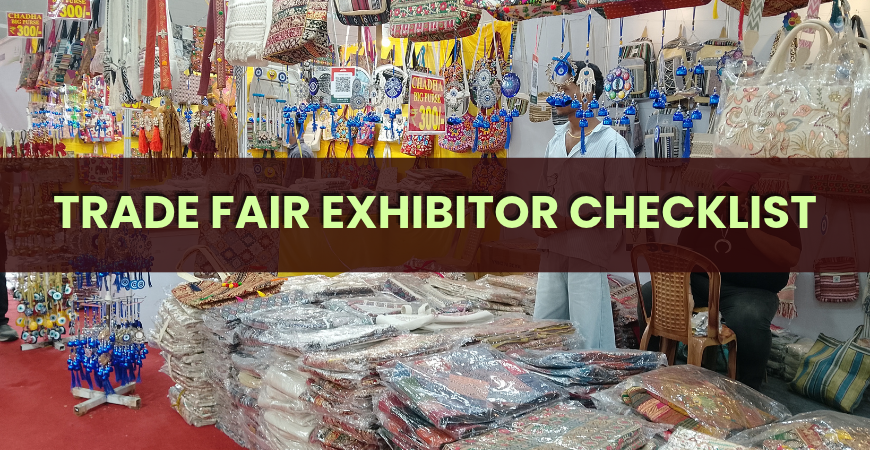
Preparing for a trade fair involves more than arranging products and setting up a booth. A practical trade fair exhibitor checklist helps businesses organise their participation, communicate effectively with visitors, manage enquiries, and make better use of the event.
However, even experienced exhibitors can overlook important details. From unclear objectives to delayed follow-ups, small mistakes can affect the overall experience. Knowing what to avoid can make your next exhibition more organised and productive.
Trade Fair Exhibitor Checklist: Mistakes to Avoid Before the Event
Good exhibition preparation begins well before the event opens. Planning ahead gives your team enough time to organise products, prepare promotional materials, and avoid unnecessary last-minute pressure.
Mistake 1: Attending Without Clear Goals
Participating in a trade fair without deciding what you want to achieve can make it difficult to measure the results.
Some businesses want to introduce new products, while others aim to generate enquiries, meet distributors, or build brand awareness. Each objective requires a different approach.
Before the event, define what you want to accomplish. Your trade fair participation plan could include:
- Introducing products or services to potential customers.
- Generating relevant business enquiries.
- Connecting with suppliers or business partners.
- Collecting customer feedback.
- Improving brand visibility.
Clear goals give your team direction and help you evaluate the exhibition afterwards.
Mistake 2: Leaving Booth Preparation Until the Last Minute
Your exhibition booth is often the first point of contact between your business and potential customers. A poorly organised display can make it difficult for visitors to understand your offering.
Prepare the booth layout, signage, product displays, and promotional materials in advance. Check that brochures, catalogues, business cards, and demonstration equipment are ready.
Your trade show booth should communicate what your business offers without requiring visitors to read lengthy descriptions. Also, review the organiser’s instructions about setup, display restrictions, and available facilities.
Mistake 3: Bringing the Wrong Products or Insufficient Stock
Displaying too many products can make a booth look crowded, while bringing too few relevant items may limit visitor interest.
Choose products that match your exhibition goals and target audience. If you are introducing a new product, consider carrying samples or demonstration materials. For an established range, prioritise items that best represent your business.
Before the event, check product availability, specifications, display requirements, and whether you need additional stock or samples.
Mistake 4: Overlooking Event Rules and Logistics
Every exhibition may have different arrangements for booth setup, product delivery, equipment, and dismantling. Assuming that all events follow the same process can create avoidable problems.
Review the organiser’s instructions and confirm important details, including:
- Event dates and operating hours.
- Exhibitor entry and setup procedures.
- Product delivery arrangements.
- Display and equipment restrictions.
- Electricity or other facility requirements, if applicable.
- Dismantling instructions and organiser contact details.
Keep important confirmations and contact information accessible throughout the event.
Mistake 5: Using Unclear or Overloaded Booth Messaging
Visitors often pass several booths while deciding where to stop. Too much text, complicated descriptions, or unclear promotional messages can make your business difficult to understand.
A focused trade fair strategy should make it easy for visitors to identify three things: what you offer, who can benefit from it, and how they can learn more.
Use short headlines, readable text, relevant visuals, and a simple call to action. Detailed product information can be shared during conversations with interested visitors.
Mistakes to Avoid During the Trade Fair
Once the exhibition begins, your team’s interactions and booth management become important. Even a well-prepared display needs active attention.
Mistake 6: Having an Unprepared Booth Team
A good display cannot compensate for a team that does not understand the products or services.
Before the event, brief staff about the main offerings, common customer questions, individual responsibilities, and the objectives of participation. If demonstrations are planned, allow everyone involved to practise beforehand.
Consistent and accurate communication helps visitors understand your business and makes conversations more useful.
Mistake 7: Waiting Passively for Visitors
Simply standing behind the display and waiting for people to approach may cause you to miss opportunities.
Welcome visitors naturally and use simple conversation starters, such as asking whether they are looking for a particular product or would like to see a demonstration.
Pay attention to their responses. Some visitors may want detailed information, while others may prefer to browse independently. Encourage conversations without pressuring them.
Mistake 8: Failing to Record Useful Leads
Collecting business cards or contact numbers is not enough if you cannot remember the conversation afterwards.
Your trade show leads process should capture useful details such as:
- Visitor name and contact information.
- Products or services they were interested in.
- Specific requirements or questions.
- Level of interest.
- Agreed next steps.
Record information responsibly, explain why you are collecting it, and obtain appropriate permission before contacting visitors.
Mistake 9: Ignoring Booth Maintenance
A booth that looks organised at the beginning of the day can become cluttered as visitors browse products and collect brochures.
Assign someone to check the display periodically. Reorganise products, replenish promotional materials, remove unnecessary clutter, and ensure demonstration equipment remains ready to use.
A clean and accessible booth helps maintain a professional presentation throughout the event.
Mistakes to Avoid After the Trade Fair
Your work does not necessarily end when the exhibition closes. The contacts and conversations made during the event may lead to future opportunities, but they need attention.
Mistake 10: Delaying Follow-Up
Waiting too long to contact interested visitors can reduce the value of the enquiries collected during the exhibition.
Organise your contacts soon after the event and prioritise them according to their requirements. Share requested product information, send relevant catalogues, or arrange meetings where appropriate.
A good trade fair follow-up process should be timely and personalised. Refer to the actual conversation instead of sending every contact the same generic promotional message.
Mistake 11: Failing to Review Performance
Without reviewing the exhibition, it becomes difficult to understand what worked and what needs improvement.
Compare the results with your original objectives. Consider the number and quality of enquiries, visitor conversations, product demonstrations, business connections, and sales where applicable.
Also, note recurring customer questions, feedback, and problems with booth arrangements. These observations can help you prepare more effectively for future exhibitions.
Quick Trade Fair Exhibitor Checklist
Use this summary to review your preparations:
| Stage | What to check |
|---|---|
| Before the event | Set clear objectives and identify your target audience |
| Before the event | Review organiser instructions and logistics |
| Before the event | Prepare booth layout, signage, and promotional materials |
| Before the event | Select relevant products and prepare equipment |
| Before the event | Brief your team and assign responsibilities |
| During the event | Welcome visitors and communicate clearly |
| During the event | Keep the booth organised |
| During the event | Record relevant enquiries and next steps |
| After the event | Contact interested visitors promptly |
| After the event | Review results and note improvements |
Applying Your Checklist at India Global Grand Trade Fair
Businesses considering participation in an exhibition such as the India Global Grand Trade Fair should first understand the event’s format, audience, and exhibitor requirements.
The fair is scheduled to take place at Patuli Circus Ground, Kolkata, from 13th to 30th November 2026. Interested businesses should refer to official event information or contact the organisers for current details about booth availability, setup instructions, and participation requirements.
Use the checklist to define your objectives, select suitable products, prepare your display, brief your team, and plan how you will manage enquiries after the event.
Frequently Asked Questions
1. What should a trade fair exhibitor checklist include?
It should cover participation goals, event requirements, booth preparation, product selection, promotional materials, staff responsibilities, visitor engagement, lead collection, and post-event follow-up.
2. What is a common mistake exhibitors make?
Attending without clear objectives is a common mistake. Without defined goals, businesses may struggle to plan their booth activities or evaluate the results.
3. How early should exhibitors start preparing?
Start well before the event. The required preparation time depends on booth arrangements, product availability, display work, and organiser requirements.
4. How can exhibitors make their booths more effective?
Use a clear layout, readable signage, relevant product displays, and concise messaging. Visitors should be able to understand your offering quickly.
5. What should exhibitors do after a trade fair?
Organise enquiries, contact interested visitors, share requested information, and review the event’s performance. Record lessons that can improve future participation.
Conclusion
A trade fair can help businesses introduce products, connect with potential customers, and understand their markets, but preparation and execution matter. Following a practical trade fair exhibitor checklist helps avoid common mistakes such as unclear goals, rushed booth preparation, weak messaging, incomplete lead records, and delayed follow-ups. Treat planning, visitor engagement, and post-event review as connected parts of the exhibition experience to make your next participation more organised and effective.
Pingback: Business Expo in Durgapur: What to Expect and Explore